Imagine that you are living in the 1970s and have just become a parent.
You buy a popular parenting book and carefully read every recommendation.
The book tells you that sleeping on the stomach is a suitable position for a baby.
You follow its advice.
Decades later, you discover that medicine has changed its recommendation. Today, placing babies on their backs to sleep is an important measure for safe sleep.
You might feel confused.
Weren't the earlier recommendations also given by doctors and other professionals?
Why does medicine change its mind?
More troubling still, if the new advice can reduce harm, what happened to the people who lived under the old advice?
Medical progress does not always mean adding new treatments.
Sometimes it means discovering that certain treatments are less effective than we had imagined.
Sometimes it means recognizing that doing more does not necessarily mean doing better.
And sometimes it means understanding a disease differently, or even reassessing a treatment that once raised concern.
These changes do not all mean that medicine was wrong in the past.
But they remind us of an important fact:
The medical knowledge we trust today did not suddenly take shape on a single day. It emerged through a long process of accumulation, debate, testing and revision.
And the things affected along the way have never been merely numbers in a study.
1. Infant sleeping position: advice that arrived decades late
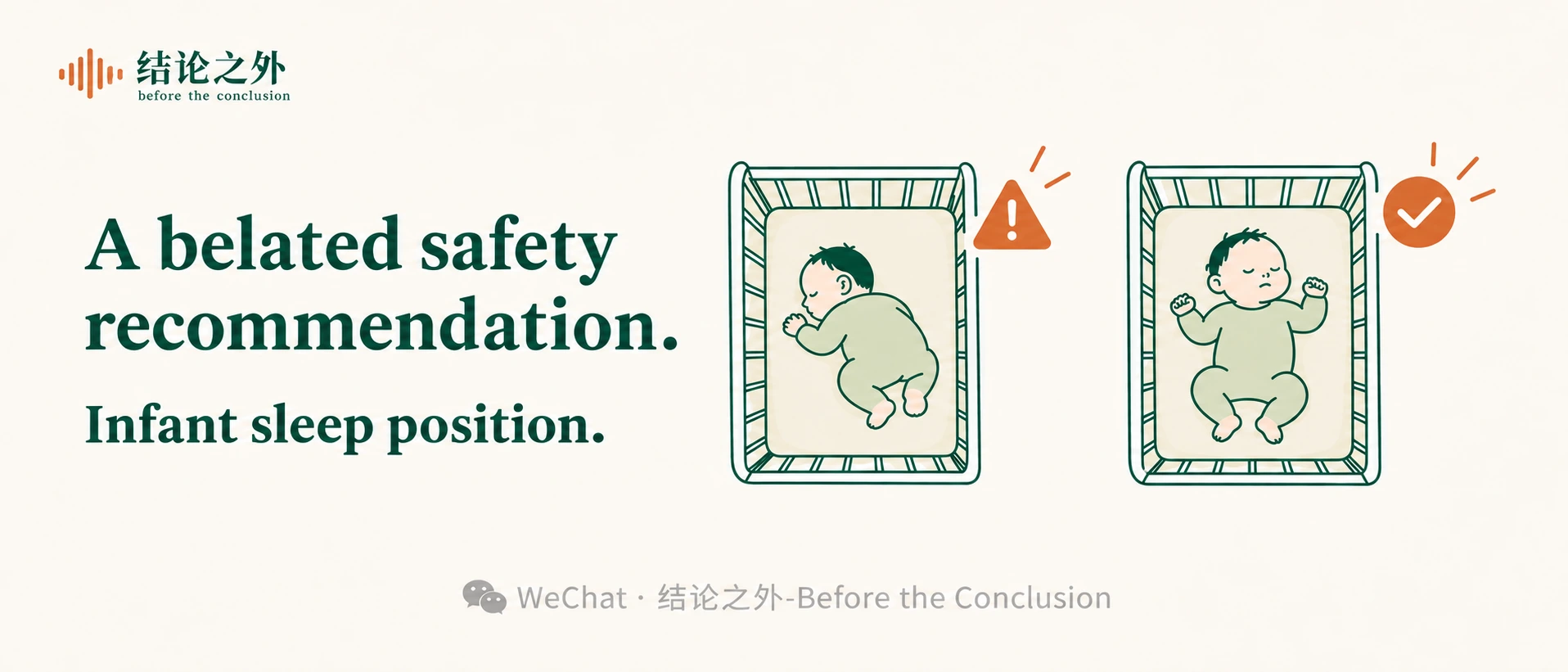
In the middle of the twentieth century, some widely read parenting guides recommended putting babies to sleep prone: on their stomachs.
This advice was not without a rationale.
Some people worried that if a baby brought up milk while lying on its back, the risk of choking or aspiration might increase.
Intuitively, sleeping on the stomach could seem safer.
But a plausible explanation is not the same as reliable verification.
As medical research developed, investigators gradually found that sleeping position might have an important association with sudden infant death syndrome.
The problem was that these studies were scattered across different periods, countries and journals. They were not brought together promptly into clear public health advice.
In 2005, Ruth Gilbert and colleagues published a systematic review in the International Journal of Epidemiology.
They reviewed observational studies of infant sleeping position and historical recommendations from 1940 to 2002.
They found that, if the evidence available by 1970 had been combined, an important warning signal was already apparent.
Compared with supine sleeping, on the back, prone sleeping, on the stomach, was significantly associated with a higher risk of sudden infant death syndrome.
The pooled odds ratio (OR) from studies then available was approximately 2.93, with a 95% confidence interval of 1.15 to 7.47.
The figure of 2.93 does not mean that the absolute probability of death for every baby sleeping on its stomach rose to 2.93 times its previous level.
It means that, in these observational studies, the statistical odds of the event in the prone group were about 2.93 times those in the supine group.
This was observational evidence. That number alone could not establish the full causal relationship.
But for public health, it was already a warning that demanded serious attention.
What matters especially is when it appeared.
1970.
Yet some parenting guides continued to recommend prone sleeping for many years afterward.
It was not until the 1990s that advice to avoid prone sleeping and encourage sleeping on the back gradually became widespread in several countries.
In their 2005 review, the researchers estimated that earlier synthesis of the evidence from 1970 onward, followed by a timely change in advice, might have prevented more than 10,000 infant deaths in the United Kingdom and at least 50,000 across Europe, the United States and Australasia.
These were retrospective estimates based on historical material, rather than an actual count of preventable deaths that could be verified case by case.
But they suddenly made an abstract scientific problem tangible.
Looking back at 1970 today, we may see only distant medical history.
But young parents living then did not know that they were in a period when medical knowledge had yet to be adequately translated into safety advice.
Like parents today, they simply wanted to take good care of their children.
They read parenting books, followed doctors' advice and believed that this advice reflected the most reliable knowledge available.
The babies who did not live to see the advice change were not just lines of numbers in a research report.
They might have had childhoods of their own, gone to school and grown into adults.
Had they lived, some might now be our contemporaries.
Ten or twenty years in the history of science may look like a stretch of time to those who come later. For people living through it, it may be a lifetime.
Of course, this does not mean that medicine should immediately change public health advice in response to any early study.
Adopting incorrect evidence too hastily can also harm patients.
The real difficulty is judging what acting and continuing to wait each mean when the evidence is still imperfect.
The next story offers a reminder from a different direction:
For some treatments, recommendations changed precisely because medicine began to test practices that had long seemed self-evident.
2. Oxygen after a heart attack: does more oxygen make the heart safer?
Suppose a patient is brought to hospital with an acute myocardial infarction, or heart attack.
The doctor gives him oxygen.
It seems entirely natural.
A heart attack means that part of the heart muscle is not receiving enough blood, and oxygen is essential to life.
Surely giving a little extra oxygen must be better for the heart?

For a long time, routine oxygen for heart attack patients was indeed widely used in clinical practice.
But there was a question that was easy to overlook.
Oxygen being essential to life does not mean that extra oxygen will necessarily improve outcomes for patients whose blood oxygen is already adequate.
In 2017, a large randomized clinical trial from Sweden was published in the New England Journal of Medicine.
The study, called DETO2X-AMI, enrolled 6,629 patients with suspected acute myocardial infarction and oxygen saturation of at least 90%.
The researchers randomly assigned them to two groups.
One routinely received supplemental oxygen.
The other breathed ambient air and received appropriate treatment if a need for supplemental oxygen arose.
After one year, all-cause mortality was 5.0% in the oxygen group and 5.1% in the ambient-air group.
No statistically significant difference was found between the groups.
The study did not demonstrate that routine oxygen reduced mortality in this population without marked hypoxemia.
That does not mean oxygen is useless.
For patients who do have hypoxemia, supplemental oxygen remains very important.
A different understanding changed:
When a patient is not short of oxygen, giving more may not provide additional benefit.
The 2025 acute coronary syndromes guideline issued by the American College of Cardiology, the American Heart Association and other organizations made this distinction clearer.
Supplemental oxygen is recommended for patients with oxygen saturation below 90%.
But routine oxygen is not recommended for those whose saturation is 90% or higher, because randomized trial evidence has not shown an improvement in cardiovascular outcomes.
There is no dramatic new drug or complicated surgical technique in this story.
What changed was simply a routine procedure long assumed to be helpful.
But it reminds us:
Medicine cannot ask only whether an intervention makes sense in theory.
It must also ask whether the intervention actually improves outcomes in real patients.
Sometimes scientific progress means more than discovering what else should be added.
It means finally learning which things no longer need to be done.
3. Breast cancer surgery: does removing more really mean living longer?
For much of the twentieth century, breast cancer surgery was shaped by an influential idea:
If cancer is dangerous, might a more extensive operation give the patient a better chance of survival?
The radical mastectomy promoted by the American surgeon William Halsted embodied this thinking.
This operation removed the entire breast, along with chest muscles and associated tissue in the armpit.
Its aim was to clear, as thoroughly as possible, the local areas to which the cancer might have spread.
Within the medical understanding of the time, the logic was understandable.
If cancer cells spread step by step from the primary tumor into surrounding tissue, a wider operation might seem likely to reduce recurrence and death.
But as understanding of breast cancer biology deepened, a different question emerged.
If some cancer cells could spread to other parts of the body even before surgery, would removing more local tissue really change long-term survival?
In 1971, the U.S. National Surgical Adjuvant Breast and Bowel Project launched an important randomized clinical trial, NSABP B-04.
Researchers compared traditional radical mastectomy with less extensive surgical strategies.
The importance of this study went beyond comparing surgical techniques.
It challenged a premise that had persisted for years:
Does a more extensive operation necessarily mean better cancer control?
In 2002, the New England Journal of Medicine published the trial's 25-year follow-up results.
In the patient population studied, traditional radical mastectomy did not show a clear long-term survival advantage.
It is essential to emphasize that B-04 compared specific strategies of total mastectomy and axillary management used at the time. It did not directly compare today's breast-conserving surgery with total mastectomy.
Later, other randomized trials, together with advances in radiotherapy and drug treatment, supported more conservative local treatment for eligible breast cancer patients.
Breast cancer surgery changed profoundly as a result.
Treatment was no longer simply a matter of removing as much tissue as possible.
Doctors placed greater emphasis on reducing unnecessary physical damage while controlling the cancer.
For a woman undergoing breast cancer surgery, this is more than a difference in surgical technique.
The extent of surgery can affect her physical function, appearance, sense of herself and life for many years afterward.
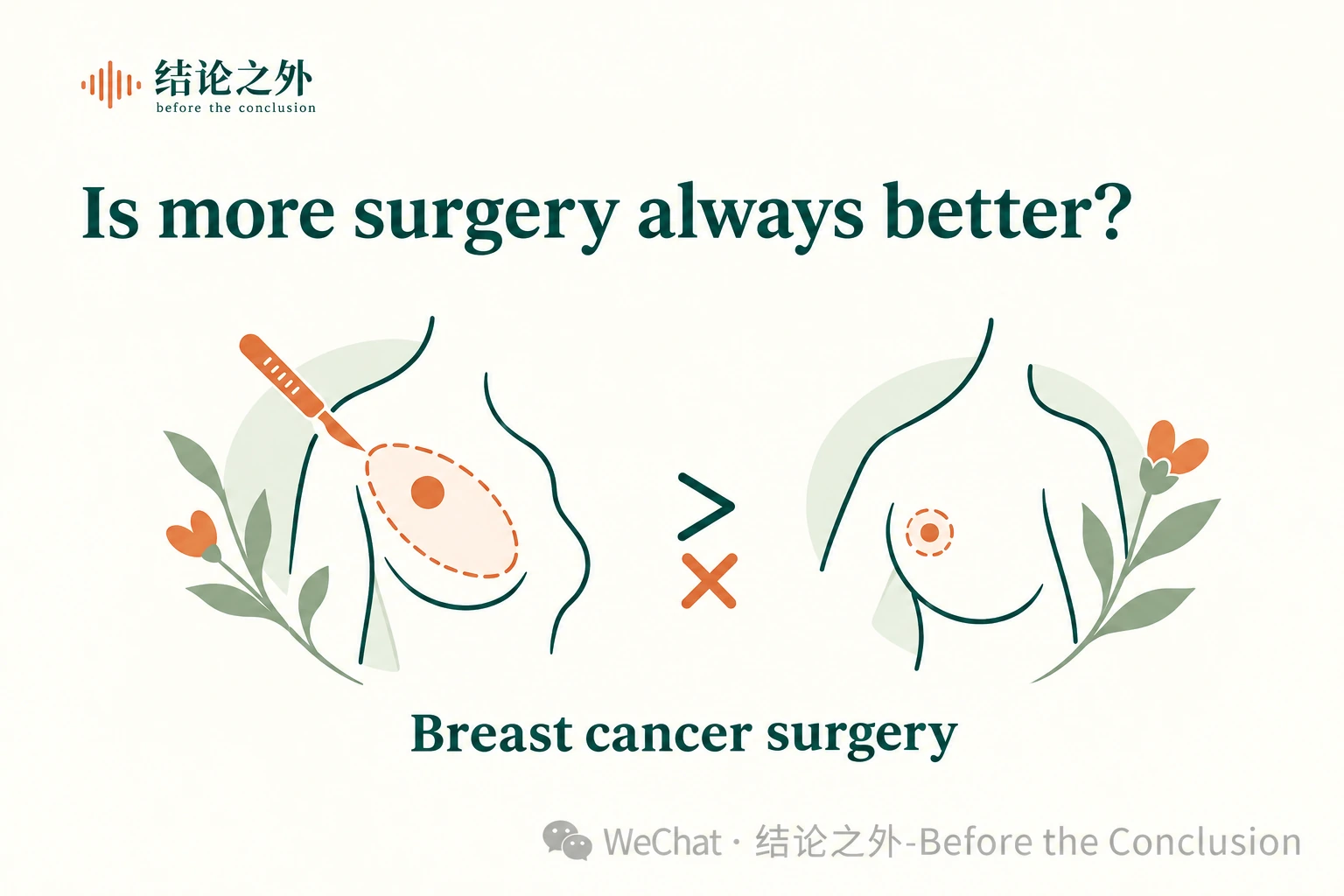
What medicine should seek is more than doing more.
It should seek reliable disease control and better long-term outcomes with a treatment burden as appropriate as possible for the patient.
Sometimes scientific progress is expressed in finally having evidence that certain things need not be done so extensively.
But what if an intervention provides no additional benefit and actually increases the risk of death?
The next case is more surprising than a reduction in the extent of surgery.
4. The CAST trial: why did a better-looking ECG mean greater danger?
By the 1980s, doctors knew that some patients developed arrhythmias, such as frequent premature ventricular beats, after a heart attack.
These abnormal rhythms were associated with a higher risk of sudden death.
A seemingly reasonable treatment logic followed:
If arrhythmias were associated with sudden death, could eliminating those abnormal beats with medication reduce deaths?
Some antiarrhythmic drugs did produce clear improvements on cardiac monitoring.
There were fewer abnormal beats.
Judged by the monitoring data, treatment appeared successful.
But the question that really mattered was still unanswered:
Did patients live longer as a result?
A large randomized clinical trial was conducted in the United States to answer it.
It was called CAST: the Cardiac Arrhythmia Suppression Trial.
Researchers wanted to know whether using drugs to suppress abnormal beats could reduce serious clinical events in patients with particular ventricular arrhythmias after a heart attack.
The results were unexpected.
In 1989, the researchers reported that patients receiving encainide or flecainide had higher mortality than those receiving placebo.
In the results published at the time, 56 of 730 patients taking these two drugs died: 7.7%.
In the corresponding placebo group, 22 of 725 patients died: 3.0%.
In other words, although the drugs suppressed the concerning abnormal beats on the ECG, treatment increased the risk of death in these particular patients.
Because of this serious safety signal, the parts of the trial involving these two drugs were stopped early.
This was a consequential turning point in modern medical history.
It exposed a dangerous line of reasoning:
An abnormal measurement being associated with the risk of death does not mean that correcting it will necessarily reduce deaths.
A measurement may capture only one part of a complex disease process.
A drug can change that measurement while causing new harm through other mechanisms.
Better numbers on an ECG do not necessarily mean that the patient benefits.
Of course, CAST does not mean that all antiarrhythmic drugs should be avoided.
Its conclusions concerned particular patients after a heart attack, particular types of arrhythmia and particular drugs.
But it profoundly changed how medical research viewed surrogate measures.
We still encounter similar questions in studies of new drugs today.
A drug shrinks a tumor.
A treatment lowers a biomarker.
An intervention improves a physiological measurement.
These findings may be very important.
But reliable evidence is still needed to bridge the distance between an improved measurement and a real benefit for the patient.
Sometimes that distance determines whether a treatment is helping patients or harming them.
5. Stomach ulcers: discovering that the problem might be bacteria rather than stress
In the preceding stories, more evidence led medicine to restrict certain treatments.
But a scientific change of mind can produce a very different result.
It can help us find more effective treatments.
For much of the twentieth century, stomach ulcers were commonly associated with stress, eating habits and excess stomach acid.
Some of these factors can indeed affect symptoms or the course of disease.
But understanding of the actual causes of many peptic ulcers was incomplete.
Doctors could suppress stomach acid with medication and allow an ulcer to heal.
Yet some patients continued to have recurrences.
Relieving symptoms did not mean that the cause of the disease had disappeared.
In 1982, the Australian pathologist Robin Warren and physician Barry Marshall, while studying stomach tissue, identified a bacterium later named Helicobacter pylori.
They proposed that this bacterium might be closely associated with gastritis and some peptic ulcers.

The idea challenged a widely held understanding of the time.
After all, the stomach is highly acidic, and people had thought that it was unsuitable for bacteria to survive in for long.
But a theory seeming to defy common sense does not make it wrong.
Equally, a surprising new discovery does not mean it can immediately become a new standard of treatment.
Repeated testing was still required.
Researchers gradually accumulated evidence connecting H. pylori infection, stomach inflammation, ulcer formation and the effects of antibacterial treatment.
Especially important were treatment studies showing that eradicating the bacterium could substantially reduce recurrence in peptic ulcers associated with H. pylori infection.
This was fundamentally different from relying solely on acid suppression to control symptoms.
In 1994, a U.S. National Institutes of Health consensus conference helped advance the inclusion of H. pylori eradication in the clinical management of relevant peptic ulcers.
Testing for and eradicating H. pylori subsequently became important parts of modern peptic ulcer diagnosis and treatment.
In 2005, Marshall and Warren received the Nobel Prize in Physiology or Medicine for this discovery.
But the most important part of the story is more than the two scientists eventually receiving recognition.
Medicine's explanation of the disease changed.
Previously, treatment might focus mainly on controlling acid and relieving symptoms.
Later, for ulcers associated with H. pylori infection, doctors could also treat the cause.
Of course, H. pylori does not cause every stomach ulcer.
Other factors, including nonsteroidal anti-inflammatory drugs, can also cause peptic ulcers.
Even so, moving from long-term symptom control to treatment directed at an identified cause was an important medical advance.
This time, changing its mind did not mean discovering that medicine had been doing too much.
It meant discovering another way to understand the disease.
6. Aspirin: why is an effective old drug no longer suitable for everyone?
Aspirin is an old drug with more than a century of use.
Many people are familiar with it.
It can relieve pain and reduce fever. By inhibiting platelet function, it can also reduce the likelihood of certain thrombotic events.
In the later twentieth century, as understanding of cardiovascular disease deepened, aspirin gradually became an important preventive medicine.
For patients who had already had a heart attack or certain ischemic strokes, antiplatelet treatment could reduce the risk of another vascular event.
A seemingly reasonable idea followed.
If aspirin could help people who had already had a cardiovascular event, why not give it in advance to people who had not?
If a low-dose aspirin tablet each day could reduce the future risk of heart attack or stroke, this seemed a simple and inexpensive way to prevent disease.
But a treatment having a plausible mechanism does not mean it offers sufficient clinical benefit to everyone.
While aspirin reduces clot formation, it also increases bleeding risk.
The question was no longer simply whether it could reduce cardiovascular events.
It was:
For people who had not yet had a cardiovascular event, was the reduction in disease risk enough to offset the increased risk of bleeding?
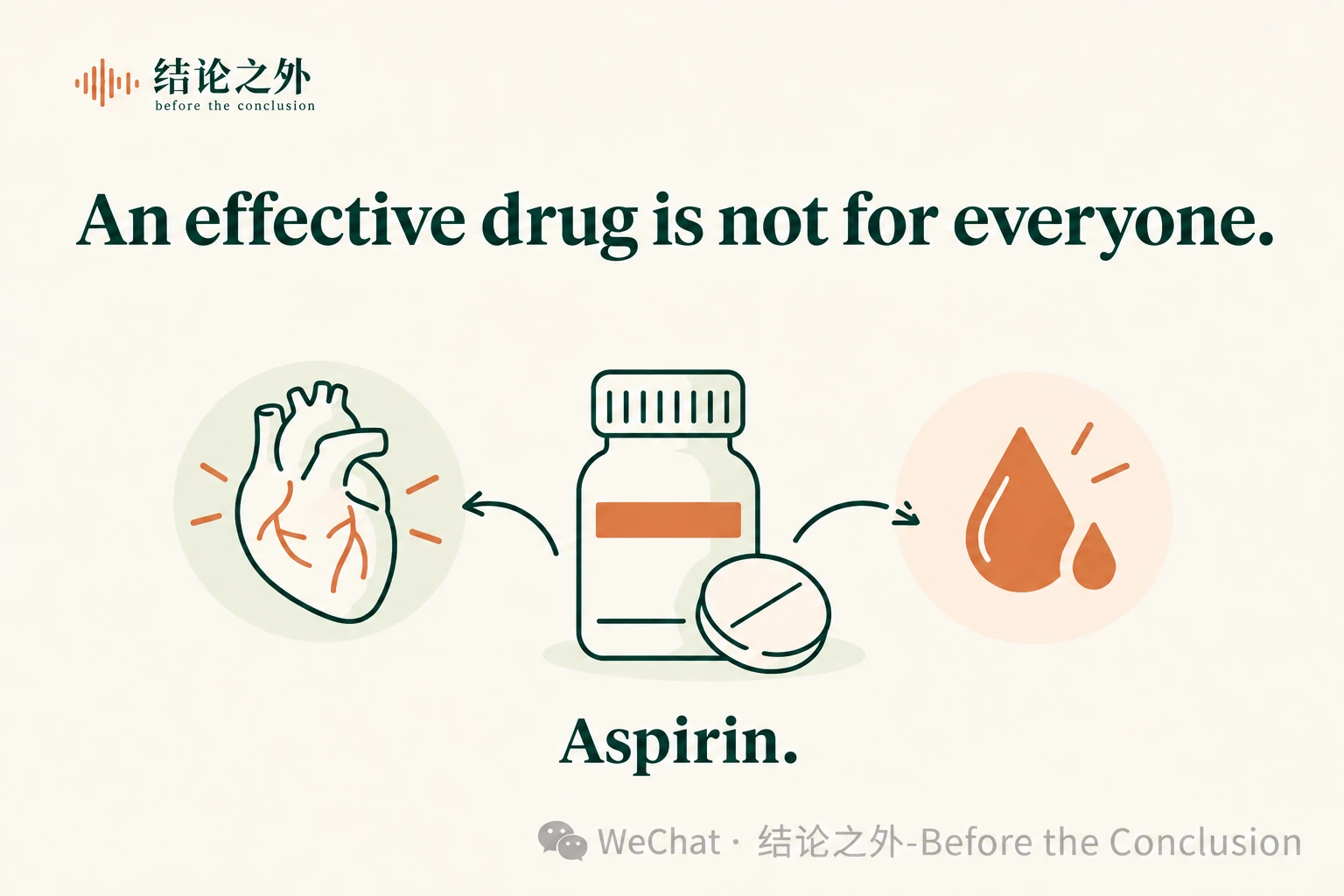
In 2018, a large randomized clinical trial called ASCEND was published in the New England Journal of Medicine.
It enrolled 15,480 adults with diabetes but no known cardiovascular disease.
They were randomly assigned to 100 milligrams of aspirin daily or placebo and followed for a mean of 7.4 years.
The results showed:
Serious vascular events occurred in 8.5% of the aspirin group and 9.6% of the placebo group.
In other words, over the study period, there were approximately 11 fewer serious vascular events per 1,000 participants in the aspirin group.
That was a treatment benefit.
But the same study contained another set of figures.
Major bleeding occurred in 4.1% of the aspirin group and 3.2% of the placebo group.
There were approximately 9 additional major bleeds per 1,000 participants in the aspirin group.
Both findings were true at the same time.
Aspirin did reduce some serious vascular events.
It also increased major bleeding.
Of course, 9 major bleeds cannot simply be subtracted from 11 vascular events.
Heart attacks, strokes and different types of bleeding differ in severity and long-term consequences.
But the study clearly exposed a problem:
A drug can be effective without being worthwhile for everyone.
As several large trials were completed, medicine began to distinguish more carefully between the benefits and risks of aspirin in different populations.
In 2022, the U.S. Preventive Services Task Force updated its recommendations.
For adults aged 60 or older without known cardiovascular disease, it recommended against starting low-dose aspirin to prevent a first cardiovascular event.
For people aged 40 to 59 with a 10-year cardiovascular risk of 10% or greater, the decision should be individualized, because the overall net benefit is small.
But aspirin did not thereby become an ineffective drug.
For many patients with established atherosclerotic cardiovascular disease, it remains an important treatment option.
What really changed was medicine's understanding of whom it was suitable for.
The earlier question might have been:
Can aspirin prevent cardiovascular events?
Now we ask further:
For whom?
How much prevention?
At what cost?
A drug moving from broad expectations to a more precisely defined patient population does not necessarily represent scientific retreat.
It may mean that we can finally see its true value more clearly.
7. Menopausal hormone therapy: discovering that the answer is not simply “good” or “bad”
There is another, more complicated possibility.
New evidence first calls a treatment into question.
As research continues, however, people discover that the initial assessment of risk needs finer distinctions between populations and treatment approaches.
Menopausal hormone therapy is one such story.
Around menopause, changes in estrogen levels can cause substantial hot flashes, night sweats, sleep difficulties and genitourinary symptoms in some women.
Hormone therapy can effectively relieve some of these symptoms.
In the later twentieth century, some observational studies also suggested that women using hormone therapy might have lower cardiovascular risk.
A more optimistic expectation gradually took shape:
Perhaps hormone therapy could do more than relieve symptoms; it might also help prevent some chronic diseases associated with aging.
But observational studies have an important limitation.
Women who choose hormone therapy may differ from those who do not in their health, access to care, lifestyles and other respects.
Even statistical adjustment cannot necessarily remove all confounding.
Randomized clinical trials were therefore still needed to test these expectations.
In 2002, results from a large randomized trial changed medical thinking.
The trial was part of the U.S. Women's Health Initiative (WHI).
One of its trials studied a particular combination of oral estrogen and progestin.
It included 16,608 postmenopausal women aged 50 to 79 who had an intact uterus.
After an average follow-up of about 5.2 years, researchers found that the overall health risks of this combination exceeded its expected benefits.
The study observed risk signals for outcomes including coronary heart disease, stroke, pulmonary embolism and breast cancer.
Although some fracture and colorectal cancer outcomes improved, the trial was stopped early because the overall balance of benefits and risks was unfavorable.
The findings quickly attracted widespread attention.
They had major effects on the use of hormone therapy and on medical recommendations.
But the story did not end in 2002.
Over the next two decades and more, researchers continued to examine differences involving age, time since menopause, hormone type, route of administration and purpose of treatment.
Medicine gradually recognized:
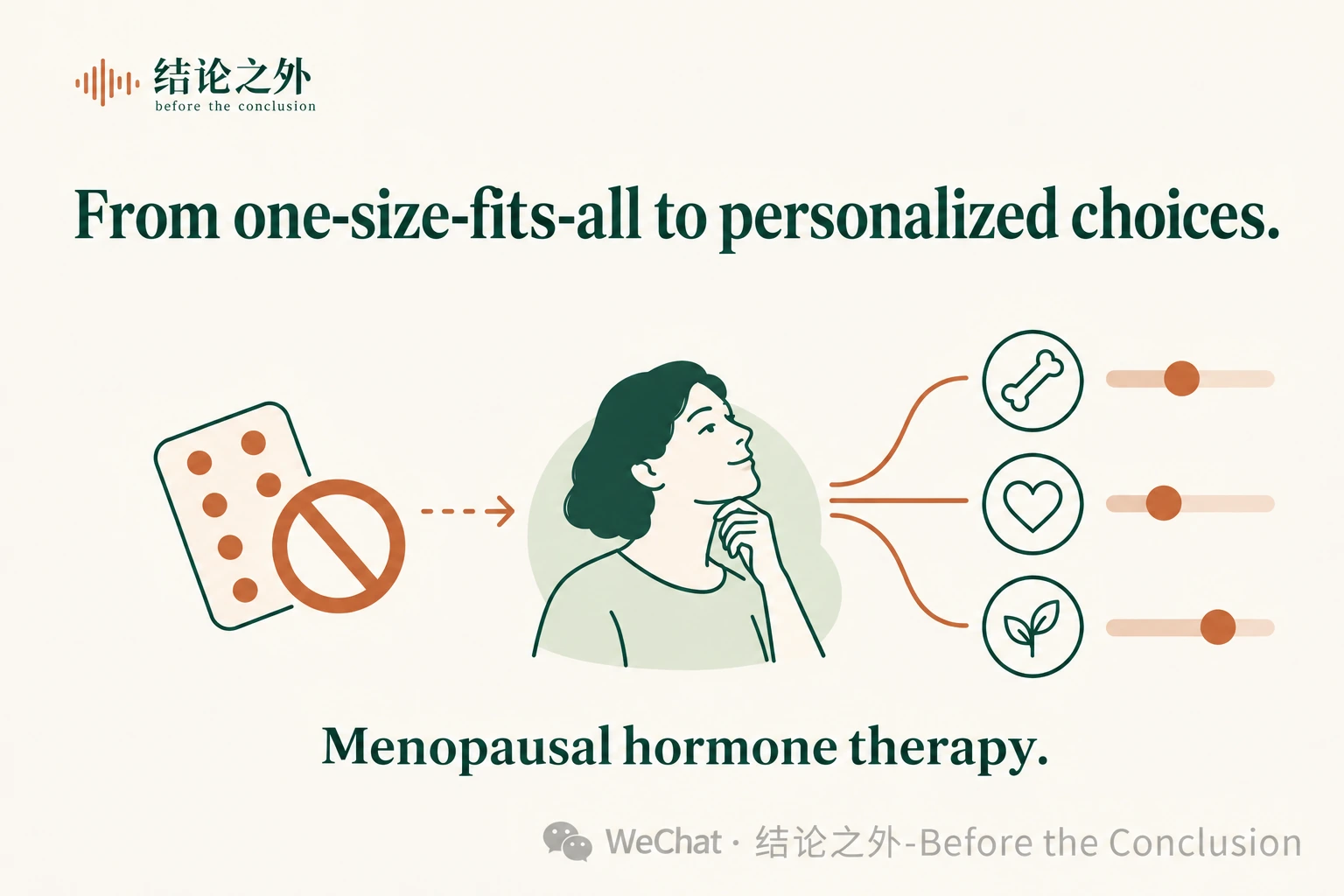
“Menopausal hormone therapy” is not one identical treatment.
Different hormone formulations, delivery routes and patient populations may have different benefits and risks.
For younger women with significant menopausal symptoms, less time since menopause and no relevant contraindications, some hormone therapy regimens may still have a reasonable balance of benefits and risks.
But that does not mean hormone therapy is suitable for all women, or that previously identified risks do not exist.
In February 2026, the U.S. FDA approved labeling updates for an initial group of six menopausal hormone therapy products, removing language about cardiovascular disease, breast cancer and possible dementia risks from the highest-level boxed warning.
Those risks did not all disappear as a result.
Other warnings continued to carry important risk information, and boxed warnings concerning endometrial cancer remained for some products.
This regulatory change cannot be taken to mean that new randomized trials had proved all hormone therapy safe.
It reflected a regulator's reassessment of how risk information should be presented in light of accumulating evidence and different interpretations of risk.
From early broad expectations, through the risk warnings of 2002, to later distinctions between patient populations and treatment approaches, menopausal hormone therapy has followed a complicated path.
That history suggests:
Progress in medical understanding sometimes means discovering that the original question was too broad, rather than arriving at a more categorical answer.
Is hormone therapy good or bad?
Perhaps we should ask instead:
Which treatment?
For which woman?
To improve which symptoms?
Started at what age and in what state of health?
And carrying which risks?
Clinical advice of real value often emerges from these more specific questions.
8. When medicine changes its mind, what should we trust?
Looking back at these seven stories, we can see that they are not all alike.
Infant sleeping position reminds us that important evidence may already exist without being translated into action in time.
Oxygen after a heart attack tells us that an intervention that seems inherently beneficial must still demonstrate better patient outcomes.
Breast cancer surgery shows that more treatment does not necessarily mean better long-term survival.
CAST reveals how dangerous the distance between a surrogate measure and genuine clinical benefit can be.
The discovery of H. pylori enabled medicine to change treatment on the basis of a new explanation of disease causation.
Aspirin helps us understand why even effective drugs need a defined patient population and careful assessment of risks.
Menopausal hormone therapy reminds us that medical understanding does not always move along a simple “right–wrong” axis. Sometimes it becomes more detailed and more individualized.
Together, these stories show the different consequences of accumulating scientific evidence.
It can prompt action.
It can limit action.
It can overturn a seemingly reasonable treatment rationale.
It can also make an initially simple judgment more precise.
But behind these changes lies another question that is easily overlooked.
Every study and every revision of a guideline takes place at a real moment in history.
Today, we can review the evidence on infant sleeping position available in 1970 and discuss which warning signals did not receive enough attention.
We can revisit CAST in 1989 and understand why certain apparently effective approaches to drug use were later abandoned.
We can also revisit the controversy over menopausal hormone therapy in 2002 and see how years of research brought new interpretations to a complex problem.
But for people living at those times, future research findings did not exist.
They could choose only on the basis of the knowledge available then.
They might have been a young person who had just become a parent.
A patient hoping to avoid another heart attack.
Someone who believed that bringing abnormal heartbeats under control meant being safer.
A patient troubled by stomach ulcers for years and treated repeatedly.
Or a woman hoping to improve her quality of life in the face of severe menopausal symptoms.
They did not know how medicine would reassess their choices decades later.
Neither do we.
The medical recommendations we trust today are not guaranteed to remain unchanged forever.
That is not a reason to stop trusting medicine.
On the contrary, it points toward a more mature view of science:
Trustworthy science can explain why it changes its mind.
What evidence supported the earlier judgment?
What new research appeared afterward?
Did that evidence change our understanding of effectiveness, risk or the population suited to treatment?
Who might benefit from the new advice, and who might bear a cost?
These questions come closer to how science really works than simply deciding whether a treatment was right or wrong in the past.
9. Evidence takes time, but people cannot put life on hold
Scientific research takes time.
A discovery must be tested.
Contradictions between studies must be explained.
Clinical advice should not change lightly because of one exciting paper.
All this caution is necessary.
But real life does not pause while science finishes its research.
Patients still need treatment.
Parents still need to care for children.
Doctors still need to make decisions with incomplete information.
Medicine therefore always faces a tension that cannot be fully resolved.
Acting too early can cause harm.
Acting too late can also miss an opportunity to reduce harm.
No simple rule can guarantee that every choice will be correct.
But science can do better.
It can bring existing evidence together sooner.
It can distinguish more rigorously between improvements in measurements and genuine patient benefit.
It can explain uncertainty in research findings more transparently.
It can assess more carefully who stands to benefit and who may face greater risk.
And when the evidence is sufficient to change a judgment, it can be willing to revise advice promptly.
Returning to the question at the start:
If medicine has changed its mind before, what should we trust today?
Perhaps what deserves our trust is more than a single medical recommendation that will never change.
It is a process of inquiry and decision-making willing to undergo continued testing, acknowledge its limitations and aim to improve outcomes for real patients.
Every change in the history of science ultimately changes more than knowledge.
It changes how people live, how disease is treated and how people face risk.
We cannot let people in the past make their choices again.
But we can work to understand and use today's evidence more carefully, more promptly and more thoughtfully.
Because the people in medical history are not so distant.
They could be us today.
Main references
1. Infant sleeping position
Gilbert R, et al. Infant sleeping position and the sudden infant death syndrome: systematic review of observational studies and historical review of recommendations from 1940 to 2002. International Journal of Epidemiology. 2005.
https://doi.org/10.1093/ije/dyi088
2. Oxygen after a heart attack
Hofmann R, et al. Oxygen Therapy in Suspected Acute Myocardial Infarction. New England Journal of Medicine. 2017.
https://doi.org/10.1056/NEJMoa1706222
2025 ACC/AHA and collaborating societies' guideline for acute coronary syndromes.
https://doi.org/10.1016/j.jacc.2024.11.009
3. Breast cancer surgery
Fisher B, et al. Twenty-five-year follow-up of a randomized trial comparing radical mastectomy, total mastectomy, and total mastectomy followed by irradiation. New England Journal of Medicine. 2002.
https://doi.org/10.1056/NEJMoa020128
4. CAST arrhythmia trial
The Cardiac Arrhythmia Suppression Trial Investigators. Preliminary Report: Effect of Encainide and Flecainide on Mortality in a Randomized Trial of Arrhythmia Suppression after Myocardial Infarction. New England Journal of Medicine. 1989.
https://doi.org/10.1056/NEJM198908103210629
5. Helicobacter pylori
The Nobel Prize in Physiology or Medicine 2005.
https://www.nobelprize.org/prizes/medicine/2005/press-release/
NIH Consensus Development Conference. Helicobacter pylori in peptic ulcer disease. 1994.
https://pubmed.ncbi.nlm.nih.gov/7920747/
6. Aspirin
ASCEND Study Collaborative Group. Effects of Aspirin for Primary Prevention in Persons with Diabetes Mellitus. New England Journal of Medicine. 2018.
https://pubmed.ncbi.nlm.nih.gov/30146931/
US Preventive Services Task Force. Aspirin Use to Prevent Cardiovascular Disease: Preventive Medication. 2022.
7. Menopausal hormone therapy
Rossouw JE, et al. Risks and Benefits of Estrogen Plus Progestin in Healthy Postmenopausal Women. JAMA. 2002.
https://jamanetwork.com/journals/jama/fullarticle/195120
U.S. Food and Drug Administration. FDA Approves Labeling Changes to Menopausal Hormone Therapy Products. February 12, 2026.
This article was independently written by Before the Conclusion, drawing on medical history, original clinical research and publicly available medical guidelines. It discusses how scientific evidence changes medical practice and does not provide individual diagnostic or treatment advice. Patients taking aspirin, hormones or other prescription treatments should not stop or adjust their treatment on the basis of this article.
Beyond the conclusion, there are still questions worth pursuing.
Medicine · Science · Ideas and Reading
Follow Before the Conclusion to stay curious and think independently together.
Text and image usage statement
The text of this article is original work by Before the Conclusion. Research material and related sources are listed at the end. You are welcome to share a link to this webpage. Without separate permission, please do not copy, repost, republish screenshots or use the images separately. Commercial use is prohibited.