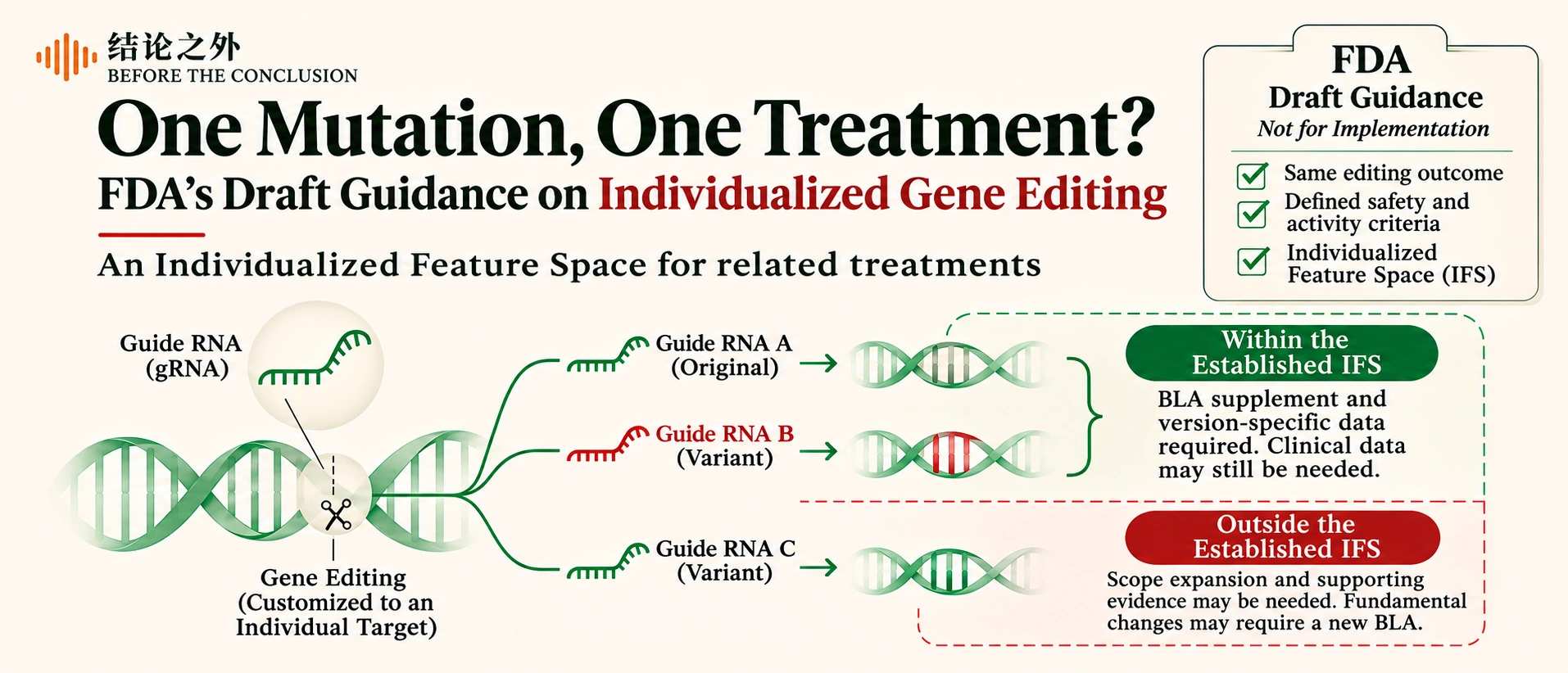
Change the Guide RNA: Is It Still the Same Medicine?
An FDA draft guidance explores the regulatory boundaries of individualized gene-editing products.
9 min readRead more
Explore approval standards, regulatory policy, and the evidence that continues to develop after a medicine reaches patients.
An FDA draft guidance explores the regulatory boundaries of individualized gene-editing products.
Funds are in escrow, while payment still awaits the required procedures. Patient compensation, accountability, and the FDA withdrawal process must be tracked separately.

Unreliable evidence, unconfirmed benefits, and newly identified safety risks can all lead to withdrawal. The reasons behind these decisions need separate examination.

Patients’ experiences of improvement, the credibility of a trial, and continued market approval each call for different evidence. The avacopan case shows why none can substitute for the others.

When disease leaves little time to wait, how should earlier access to treatment be weighed against the costs of uncertain efficacy?

Pain relief and new harm can coexist. How should the assessment of benefit and risk change when both become visible?

Why does withdrawal of one indication differ from withdrawal of an entire medicine? From progression-free survival to patients’ lives, this case reexamines treatment value.

When the molecule stays the same but the dose, regimen and eligible patients change, what new evidence is needed?

Patient relief, investor settlements, and transition supply address different problems. Public records show how losses are handled.
Examine how trial reliability, regulatory proceedings, and patient questions reshape the assessment of an acquired drug.

An accelerated approval opens a defined new indication. Response durability, confirmatory evidence and real adoption will shape its lasting value.