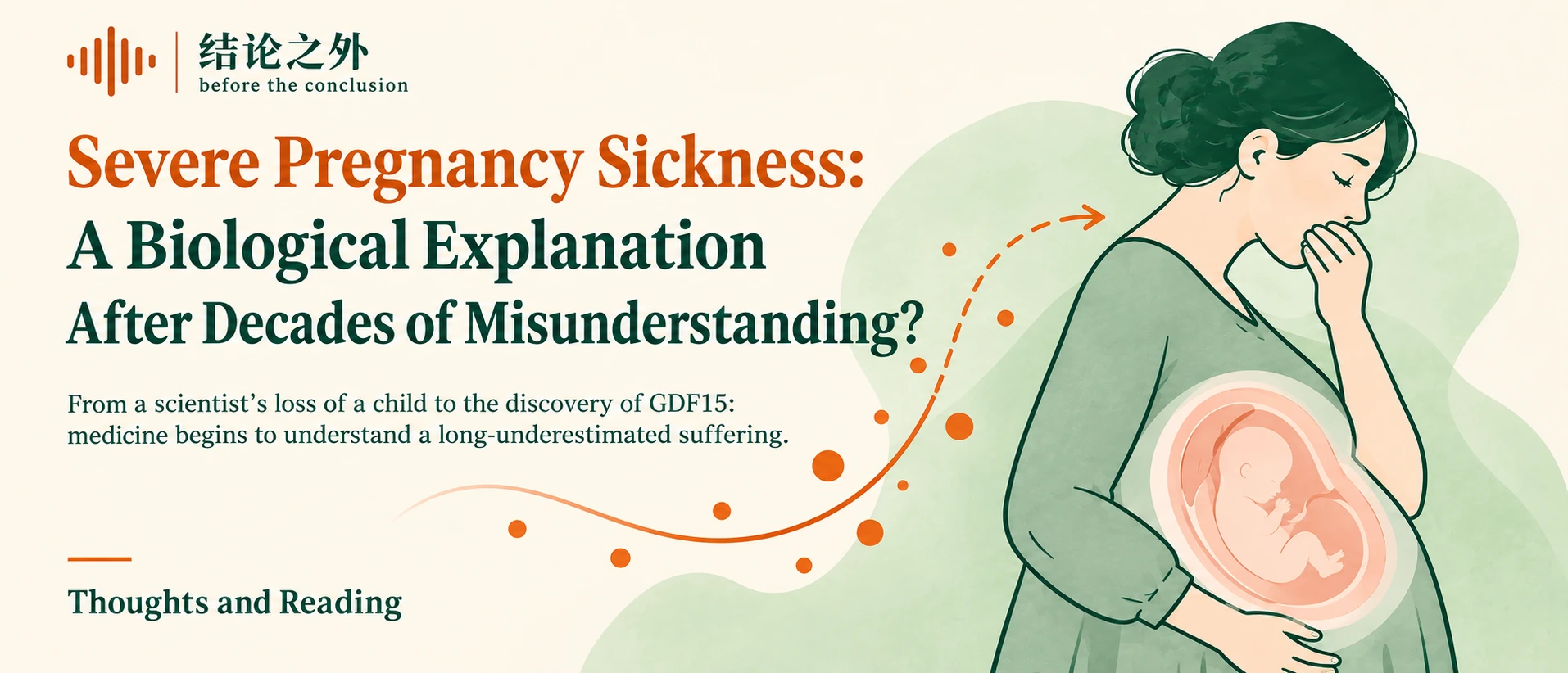
In 1999, the American genetics researcher Marlena Fejzo became pregnant with her second child.
It should have been a time of anticipation.
But soon after becoming pregnant, she developed extremely severe nausea and vomiting. Her condition deteriorated rapidly. Even something as simple as turning over could trigger unbearable nausea.
She could not eat or drink normally. She spent long periods confined to bed, relying on medical support for nutrition and hydration.
She knew she was seriously ill.
Yet one explanation she received for her suffering was that she was using her symptoms to seek attention.
Fejzo later lost the baby.
The experience changed her life. A genetics researcher who had studied conditions including uterine fibroids and cancer, she began devoting more and more of her energy to a question that had long received too few research resources:
Why do some women experience such severe nausea and vomiting during pregnancy?
It sounds like a straightforward question.
After all, nausea and vomiting are among the most familiar symptoms of pregnancy.
But it took medicine a long time to begin to understand them.
1. What does it mean when suffering is considered “normal”?
In films and television, morning sickness has almost become a shorthand for pregnancy.
A woman suddenly feels nauseated and rushes to the bathroom. The camera then cuts to a pregnancy test, and the audience understands what is about to happen.
This scene is easy to recognize because nausea and vomiting really are very common in early pregnancy.
But common does not mean unimportant.
For most pregnant women, nausea and vomiting begin early in pregnancy and gradually ease as the pregnancy progresses.
Some, however, experience something far beyond ordinary pregnancy sickness.
They may be unable to eat all day, vomit repeatedly, lose substantial weight and develop dehydration, electrolyte disturbances and malnutrition. They may even be unable to carry out the most basic daily activities.
This severe condition is called hyperemesis gravidarum (HG).
According to the Royal College of Obstetricians and Gynaecologists' 2024 guideline, HG affects approximately 1%–3% of pregnancies.
It can lead to repeated medical visits and hospital admissions, with major effects on a pregnant woman's physical and mental health, family life and pregnancy outcomes.
To complicate matters, HG does not occur only in the morning.
The name “morning sickness” can itself be misleading. Nausea can occur at any time of day. For people with severe illness, there may be almost no real respite.
Medicine has proposed various explanations over the years, including hormonal changes, altered gastrointestinal function and psychological factors.
Some of these factors may indeed contribute to symptoms.
But at certain points in history, severe pregnancy sickness was also explained as a woman's psychological resistance to pregnancy or motherhood.
The deepest problem with that explanation was more than its lack of an adequate biological basis.
When symptoms are attributed to a patient's psychological attitude, medicine may no longer see the search for a physiological mechanism as equally urgent.
Real physical suffering can then become trapped between two judgments:
Pregnancy is uncomfortable anyway.
And you seem less able to tolerate it than other people.
Fejzo's experience is an example of this problem that is difficult to dismiss.
2. Why did one patient spend more than twenty years seeking an answer?
After her severe HG, Fejzo began collecting research on the condition.
She found that medicine still lacked a clear understanding of its cause and that it had been studied far less thoroughly than some common diseases.
This raised another question for her:
If a disease can become serious enough to threaten a pregnant woman's life, why is its biological basis still so poorly understood?
As a genetics researcher, she first focused on familial and genetic factors.
Women who experience severe sickness in one pregnancy may develop similar problems in later pregnancies.
Family studies also found some degree of familial clustering.
These clues suggested that differences between individuals might involve genetic susceptibility, rather than simply differences in psychological tolerance.
But familial clustering alone cannot establish that a particular gene causes a disease.
Larger genetic studies were needed to identify biological signals genuinely associated with it.
Fejzo later worked with research teams and the consumer genetics company 23andMe, gaining access to larger datasets.
In 2018, she and her colleagues published a genome-wide association study in Nature Communications.
They found significant associations between HG and severe pregnancy sickness and several genetic regions, including regions related to GDF15 and IGFBP7.
GDF15 stands for growth differentiation factor 15.
The name may be unfamiliar to most readers.
Its biological functions, however, are highly relevant to severe pregnancy sickness.
GDF15 is a signaling protein involved in the cellular stress response. Through a specific receptor pathway in the brainstem, it can influence appetite, nausea and food aversion.
Some disease states and treatments, including certain cancers and their treatments, may also be accompanied by elevated GDF15 levels.
Researchers began to ask:
Could HG be related to this signaling protein?
The discovery brought a problem long regarded as a complex pregnancy symptom into a more specific realm of molecular biology.
But scientists had not yet found the whole answer.
Finding that a gene is associated with disease risk is not the same as knowing why it contributes to disease.
The crucial breakthrough was still to come.
3. Why does a higher hormone level not always mean more severe vomiting?
In December 2023, a study involving researchers at the University of Cambridge and other institutions, published online in Nature and appearing in print in 2024, shed further light on the relationship between GDF15 and pregnancy sickness.
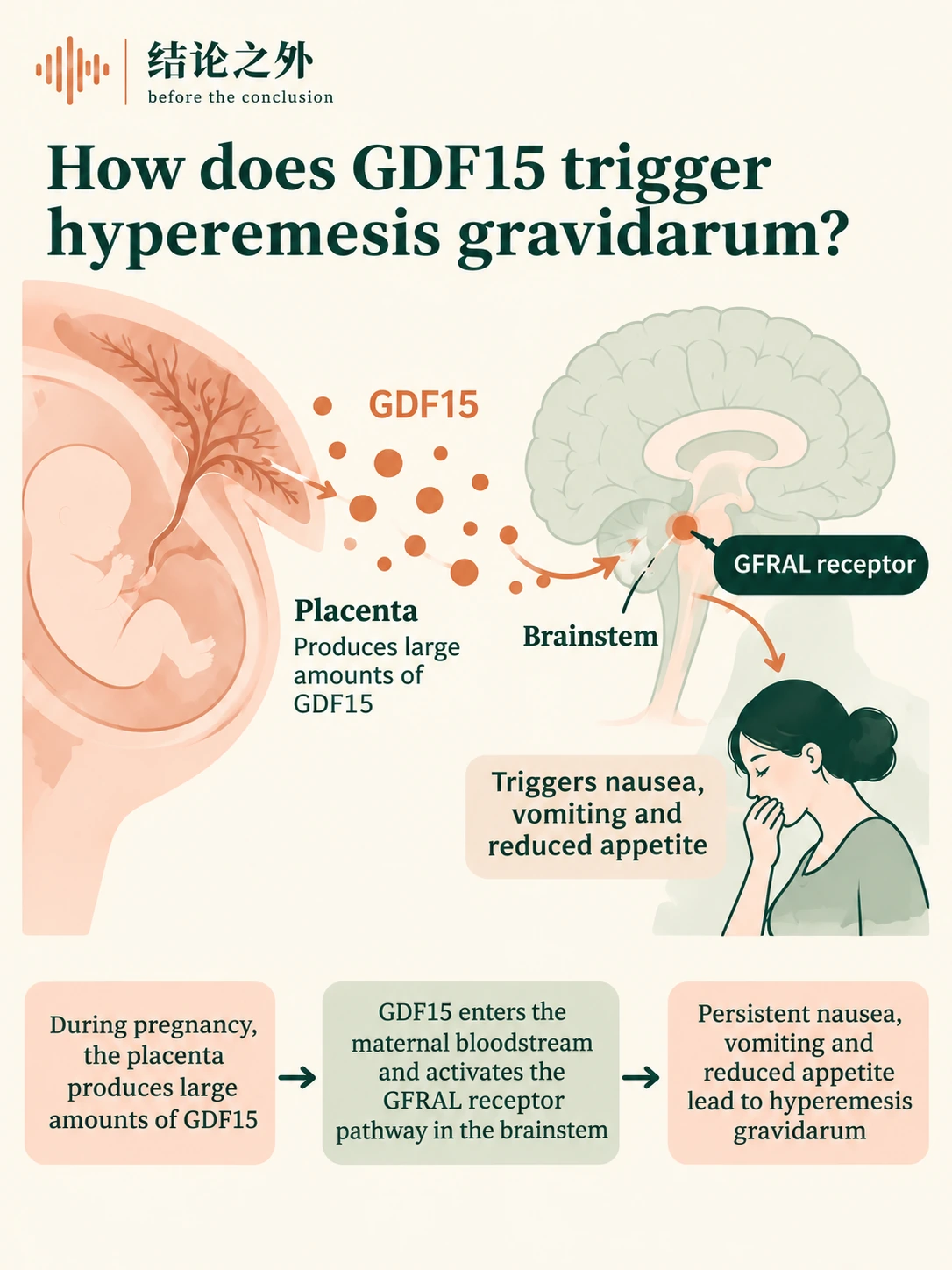
The researchers found that most of the GDF15 in maternal blood during pregnancy comes from the fetal–placental unit.
Pregnancy therefore exposes the mother's body to a powerful biological signal unlike its usual experience.
GDF15 can influence nausea, vomiting and appetite through pathways involving the GFRAL receptor in the brainstem.
© Before the Conclusion | Original concept · Created with AI assistance. Reposting, copying, modification and commercial use are prohibited without permission.
At first glance, it might seem that measuring the GDF15 concentration in a pregnant woman's blood should explain how severe her sickness is.
But the findings were more interesting than that.
The researchers found that HG risk is determined by more than GDF15 levels during pregnancy.
The mother's exposure and sensitivity to GDF15 before pregnancy may also play a crucial role.
Women carrying certain genetic variants associated with HG risk had lower GDF15 levels outside pregnancy and a higher risk of the condition. This does not mean that researchers had measured low GDF15 levels before pregnancy in every patient.
When pregnancy begins and GDF15 rises rapidly, these women may be more sensitive to the change.
In other words, different people may respond very differently to the same hormonal signal.
An imperfect but accessible analogy may help.
Imagine two people entering a room where the lights suddenly become bright.
One is already accustomed to strong light; the other has spent a long time in relatively dim surroundings.
The same change in brightness may feel very different to them.
GDF15 research suggests that similar differences in adaptation and sensitivity may influence nausea during pregnancy.
But this is only an analogy to aid understanding.
The human GDF15 pathway involves hormone concentration, receptor signaling, genetic background and nervous-system responses. It is not a simple light switch.
The researchers also observed that women with β-thalassemia, whose GDF15 levels are chronically high, reported very little nausea and vomiting during pregnancy. This observation offered a clue that prior exposure might influence later sensitivity. It did not, by itself, establish a preventive treatment.
Animal experiments also supported the possibility that earlier exposure to GDF15 can alter the body's subsequent response to the signal.
Together, these findings formed a new mechanistic explanation:
HG may depend on how the mother's body senses GDF15, as well as how much the placenta produces.
It must be emphasized, however, that GDF15 has not been established as the sole factor explaining all severe pregnancy sickness.
A larger, multi-ancestry genetic study published in Nature Genetics in 2026 included 10,974 cases of severe pregnancy sickness and 461,461 controls. It identified 10 associated loci, 6 of them newly discovered.
This shows that the condition still has a complex genetic and biological background.
GDF15 matters greatly, but the whole problem has not been solved.
Likewise, a single GDF15 blood test cannot currently determine accurately whether a pregnant woman has HG.
Nevertheless, the scientists' question has changed fundamentally.
In the past, people often asked why a particular woman seemed unable to tolerate the normal discomfort of pregnancy.
Now, researchers can ask a further question:
Why does her body respond so strongly to biological signals during pregnancy?
These two questions may appear to differ only in wording.
But they point medical thinking in entirely different directions.
4. Once a mechanism is found, will treatment follow?
A clear biological mechanism can often open a new direction for drug development.
If GDF15 acts through a brainstem receptor pathway, could blocking that signal relieve severe nausea and vomiting?
This is one route now being investigated.
For example, an experimental antibody called NGM120 targets GDF15's receptor, GFRAL, blocking GDF15–GFRAL binding and related signaling. It is not an antibody that binds directly to GDF15. EMERALD, a phase 2 study in patients with HG, is a proof-of-concept trial whose primary endpoint is safety and tolerability. It also explores potential efficacy signals such as symptom improvement. It should not be treated as a completed confirmatory efficacy trial.
But identifying a drug target and proving that a drug can safely treat pregnant women are entirely different tasks.
Drug research in pregnancy must pay particular attention to the safety of both mother and fetus.
Even if a drug effectively reduces vomiting, researchers must examine whether it affects fetal development, other physiological processes during pregnancy and subsequent pregnancy outcomes.
Progress in GDF15 research therefore cannot yet be taken to mean that HG has a new, thoroughly validated, specifically effective treatment.
Researchers have also proposed another intriguing direction.
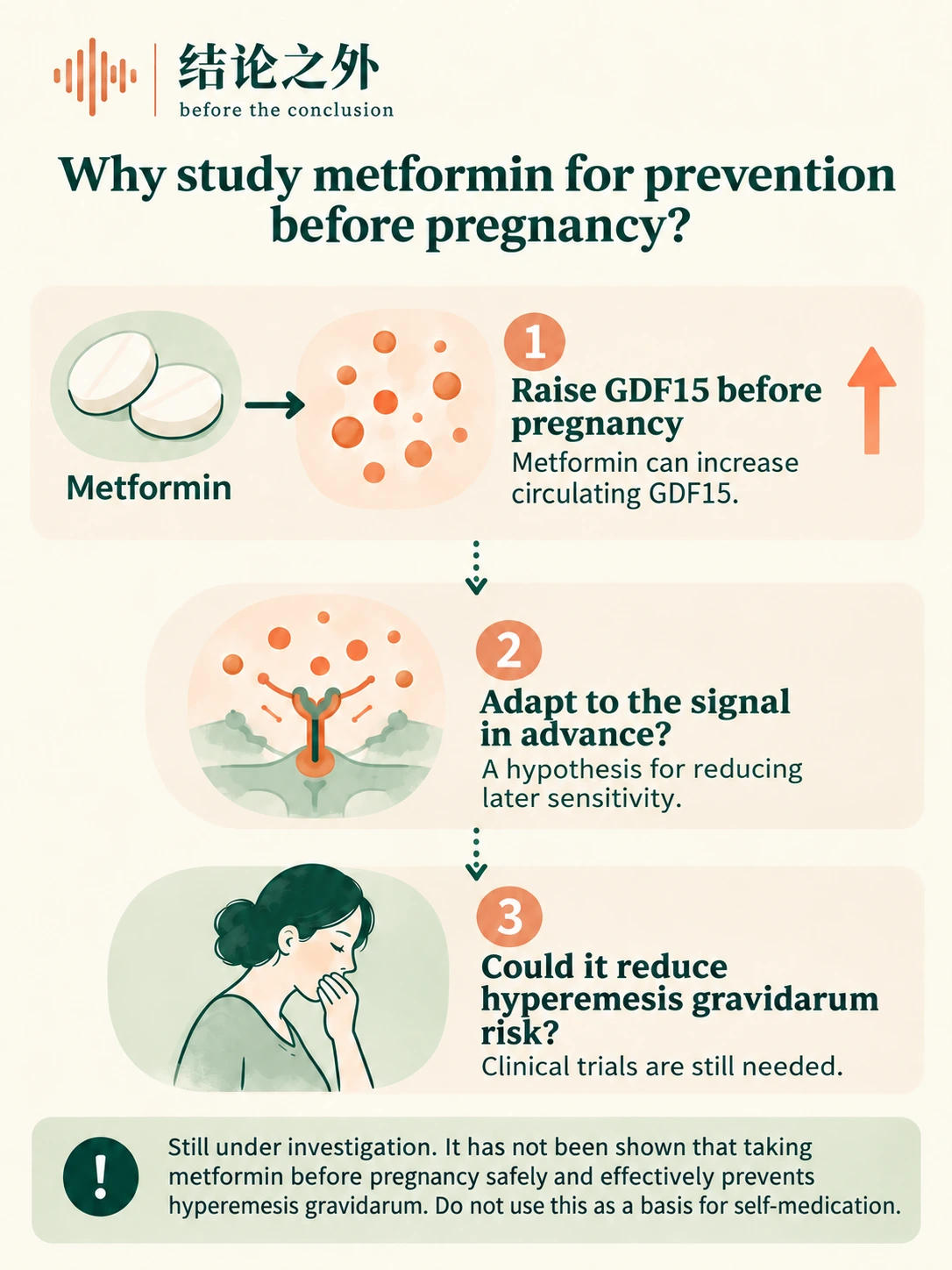
If GDF15 exposure before pregnancy can influence later sensitivity, could gradually increasing that signal before conception allow the body to adapt in advance?
This brought a medicine with many years of clinical use into focus:
Metformin.
Metformin is used primarily to treat type 2 diabetes and also in some other metabolic conditions. Research has found that it can increase GDF15 levels.
Researchers therefore asked whether using metformin before pregnancy might change GDF15 sensitivity and reduce the risk of recurrent severe HG.
The idea is appealing.
After all, studying a drug with existing clinical experience may offer considerable development advantages over creating an entirely new one.
A Danish nationwide registry cohort study published in 2026 analyzed approximately 1.45 million pregnancies. Overall, preconception metformin use did not reduce the occurrence or recurrence of HG. Within the group already using metformin, longer use before conception and use continuing around conception were associated with a lower incidence of HG. These findings provide leads for further research; they do not demonstrate that all women planning pregnancy would benefit from taking the drug.
As of 2026, there is still insufficient randomized clinical trial evidence that metformin taken before pregnancy can safely and effectively prevent HG.
Observational research is especially vulnerable to differences between populations, existing diseases, reasons for medication use and other confounding factors.
An individual patient having fewer symptoms in a later pregnancy after using a drug also does not establish that the drug caused the improvement.
Therefore, preconception metformin to prevent HG remains a research hypothesis and should not be a basis for self-medication.
© Before the Conclusion | Original concept · Created with AI assistance. Reposting, copying, modification and commercial use are prohibited without permission.
For patients who already have severe pregnancy sickness, existing evidence-based treatment remains very important.
The Royal College of Obstetricians and Gynaecologists' 2024 guideline explicitly recommends timely, appropriate antiemetic treatment, fluid replacement, nutritional support and vitamin B1 supplementation when needed, according to symptom severity, to avoid serious complications from prolonged vomiting and inadequate nutrition.
This reminds us:
New biological breakthroughs deserve anticipation. But the prospect of better drugs in the future must not deprive patients of the medical care they should receive today.
5. Does understanding suffering also mean understanding the patient?
Fejzo's story is moving for more than the fact that a scientist finally uncovered an important molecular mechanism after years of research.
It also exposes a more complicated problem in medicine.
Whether a disease is adequately studied does not always depend entirely on how much suffering it causes.
It also depends on how medicine and society understand that suffering.
HG has long occupied an uneasy position.
Pregnancy is a common life experience.
Pregnancy sickness is also common.
So when a minority of women experience symptoms severe enough to disrupt daily life or even threaten their health, their experiences can easily be filed under “difficulties every pregnant woman encounters.”
But a common physiological state can still have severe complications that require medical attention.
Nor should physical suffering automatically acquire a value of something that must be endured because it occurs during pregnancy, childbirth or another life process to which society gives special meaning.
Of course, medicine must not ignore psychological factors.
Serious illness can itself bring anxiety, depression, fear and trauma. Psychological support can be an important part of comprehensive care.
But psychological effects and biological causes are not mutually exclusive explanations.
A person feeling despair because of prolonged, severe vomiting does not mean that despair caused her vomiting.
The direction of causation needs to be distinguished.
Modern medicine's task is to use research, as far as possible, to clarify these different levels of the problem one by one.
6. A real breakthrough begins by believing patients' experiences
Looking back at Fejzo in 1999, she could not have known that more than twenty years later researchers would identify links between GDF15, its related pathways and severe pregnancy sickness.
She could only feel what was happening in her body.
At the time, medicine did not offer a good enough explanation.
Today, science has moved a large step forward.
We know that genetic factors are associated with HG risk and that GDF15 produced by the fetal–placental unit plays an important role. We are also beginning to understand why a mother's prior hormone exposure and sensitivity may affect disease severity.
New drug studies are under way.
But this history should not be written as a story that has already reached a happy ending.
Discovering a mechanism does not mean that every patient immediately gains access to effective treatment.
Identifying a new target does not mean drug development and safety testing are complete.
Individual differences in the condition also need further study.
What deserves our attention is the process by which medical understanding changes.
When a mechanistic explanation was lacking, a patient's experience could seem difficult to understand, or even provoke suspicion.
When genetics and molecular biology provided new evidence, the same experience began to receive a different explanation.
Scientific discovery did not make the patient's symptoms more real.
They were real all along. What changed was medicine's ability to understand them.
Perhaps this is the thought most worth taking from the story.
Scientific research can tell us why a disease occurs.
But before the answer is found, medicine must still take unexplained suffering seriously.
Many diseases remain at a similar stage today.
Patients know what they are going through.
Researchers have yet to find a complete answer.
We cannot require everyone to wait for a mechanism to be discovered before receiving understanding and care.
Scientific progress means more than finally being able to explain diseases we once did not understand. It also means being willing to listen carefully to patients before we understand.
Main references
- Anna Russell. Can Extreme Morning Sickness Be Cured? The New Yorker, August 7, 2026.
https://www.newyorker.com/news/essay/can-extreme-morning-sickness-be-cured - Fejzo MS, et al. Placenta and appetite genes GDF15 and IGFBP7 are associated with hyperemesis gravidarum. Nat Commun. 2018;9:1178. doi:10.1038/s41467-018-03258-0.
https://doi.org/10.1038/s41467-018-03258-0 - Fejzo M, et al. GDF15 linked to maternal risk of nausea and vomiting during pregnancy. Nature. 2024;625(7996):760–767. doi:10.1038/s41586-023-06921-9. Published online December 13, 2023.
https://doi.org/10.1038/s41586-023-06921-9 - Fejzo M, et al. Multi-ancestry genome-wide association study of severe pregnancy nausea and vomiting. Nat Genet. 2026 Apr;58(4):810–820. doi:10.1038/s41588-026-02564-4.
https://doi.org/10.1038/s41588-026-02564-4 - Royal College of Obstetricians and Gynaecologists. The Management of Nausea and Vomiting in Pregnancy and Hyperemesis Gravidarum. Green-top Guideline No. 69, 2024.
https://doi.org/10.1111/1471-0528.17739 - A Research Study Testing NGM120 in Pregnant Women with Severe Nausea and Vomiting (Hyperemesis Gravidarum). EMERALD phase 2 proof-of-concept trial; ANZCTR registration ACTRN12624001421527.
https://anzctr.org.au/Trial/Registration/TrialReview.aspx?ACTRN=12624001421527 - van der Minnen LM, et al. Preconception metformin and hyperemesis gravidarum in Denmark: clinical implications of growth differentiation factor 15's etiological role. Am J Obstet Gynecol. 2026 May;234(5):1502–1515. doi:10.1016/j.ajog.2025.12.060. PMID:41478545.
https://pubmed.ncbi.nlm.nih.gov/41478545/
This article was independently written by Before the Conclusion, taking a long-form report in The New Yorker as a starting point and drawing on original genetics research, clinical guidelines and drug-development material. It is not a translation of that report. It is intended for the exchange of scientific knowledge and does not provide medication advice for pregnancy or preconception.
Beyond the conclusion, there are still questions worth pursuing.
Medicine · Science · Ideas and Reading
Follow Before the Conclusion to stay curious and think independently together.
Text and image usage statement
The text of this article is original work by Before the Conclusion. Sources for the people, research and historical material discussed are listed at the end. The illustrations were conceived by Before the Conclusion and created with AI assistance; further information appears below the images. You are welcome to share a link to this webpage. Without separate permission, please do not copy, repost, republish screenshots or use the images separately. Commercial use is prohibited.